
Pax Christi International welcomes the recent commitment by faith and ethical communities across Africa and the diaspora to advance the cause of reparative justice. Following a high-level convening in Addis Ababa, Ethiopia, these communities have signed the Addis Ababa Declaration on Reparations, signaling a resolute step toward addressing historical injustices and their lasting impact on African nations and people of African descent. Pax Christi International was present at this convening, represented by our Africa Regional Coordinator, Dieudonné A. Serukabuza.
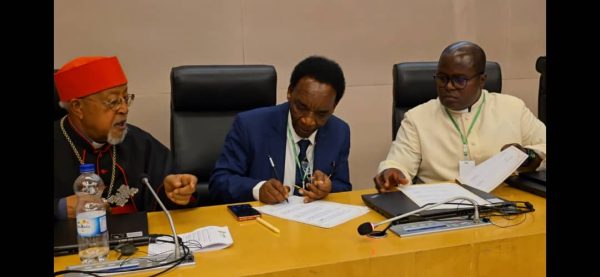
Dieudonné Serukabuza signing the Declaration
A Call for Implementation and Global Action
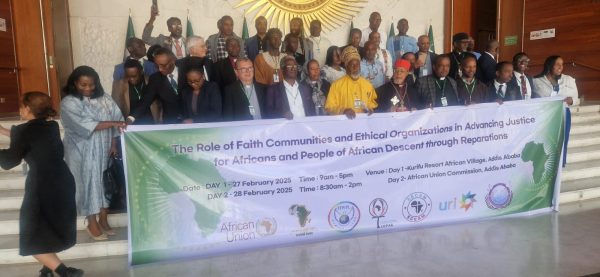
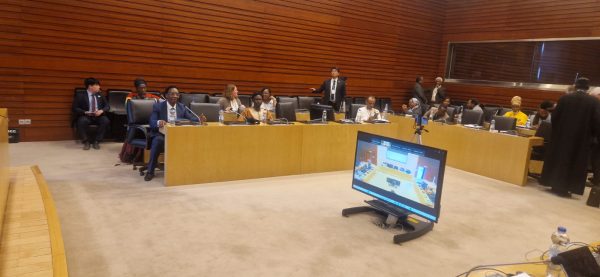
The conference, held from 27-28 February 2024 at the Kuriftu Resort African Village and the African Union Commission, emphasised the moral obligation of faith-based institutions to advocate for reparations. Participants, including high-level officials, religious leaders, scholars, and human rights advocates, reaffirmed their dedication to turning commitments into tangible outcomes.
The organising bodies have pledged to work closely with the African Union, UNESCO, the Government of Ghana, Regional Economic Communities (RECs), policymakers, global institutions, and grassroots movements to ensure that reparative justice becomes a reality.
Reparations Beyond Financial Compensation
Reparations must include acknowledging historical truths, fostering reconciliation, and creating avenues for economic and social empowerment. The Addis Ababa conference reinforced that reparative justice requires systemic change, policy reform, and a commitment to sustainable peace.
Key Outcomes and Next Steps
The signing of the Addis Ababa Declaration represents a landmark commitment to justice, addressing the deep-rooted legacies of the Trans-Atlantic Slave Trade, slavery, colonisation, and structural inequalities. Among the major outcomes of the gathering were:
- The establishment of an AU Committee of Experts on Reparations to develop an African-led framework for restorative justice.
- The appointment of an AU Special Envoy on Reparations to advocate for African and diaspora reparations at a global level.
- Recognition of ecological debt as part of the reparations discourse, highlighting the environmental destruction caused by colonial-era exploitation.
- A proposal for the African Union to declare a Decade of Reparations, sustaining momentum on the cause and ensuring continued advocacy.
Faith Communities as Catalysts for Change
The role of faith communities in peacebuilding, reconciliation, and social justice is crucial. Pax Christi International stands in solidarity with African faith leaders and ethical organisations in their call for justice, urging international institutions, policymakers, and faith communities worldwide to support these initiatives.
Reparative justice is not just about acknowledging the past, it is about building a more just and peaceful future. Pax Christi International remains committed to collaborating with other faith-based movements that work towards healing and restoring dignity to communities affected by historical injustices.
As we move forward, we urge all stakeholders, including governments, civil society, and international organisations, to heed this call and take meaningful action.

Leave A Comment