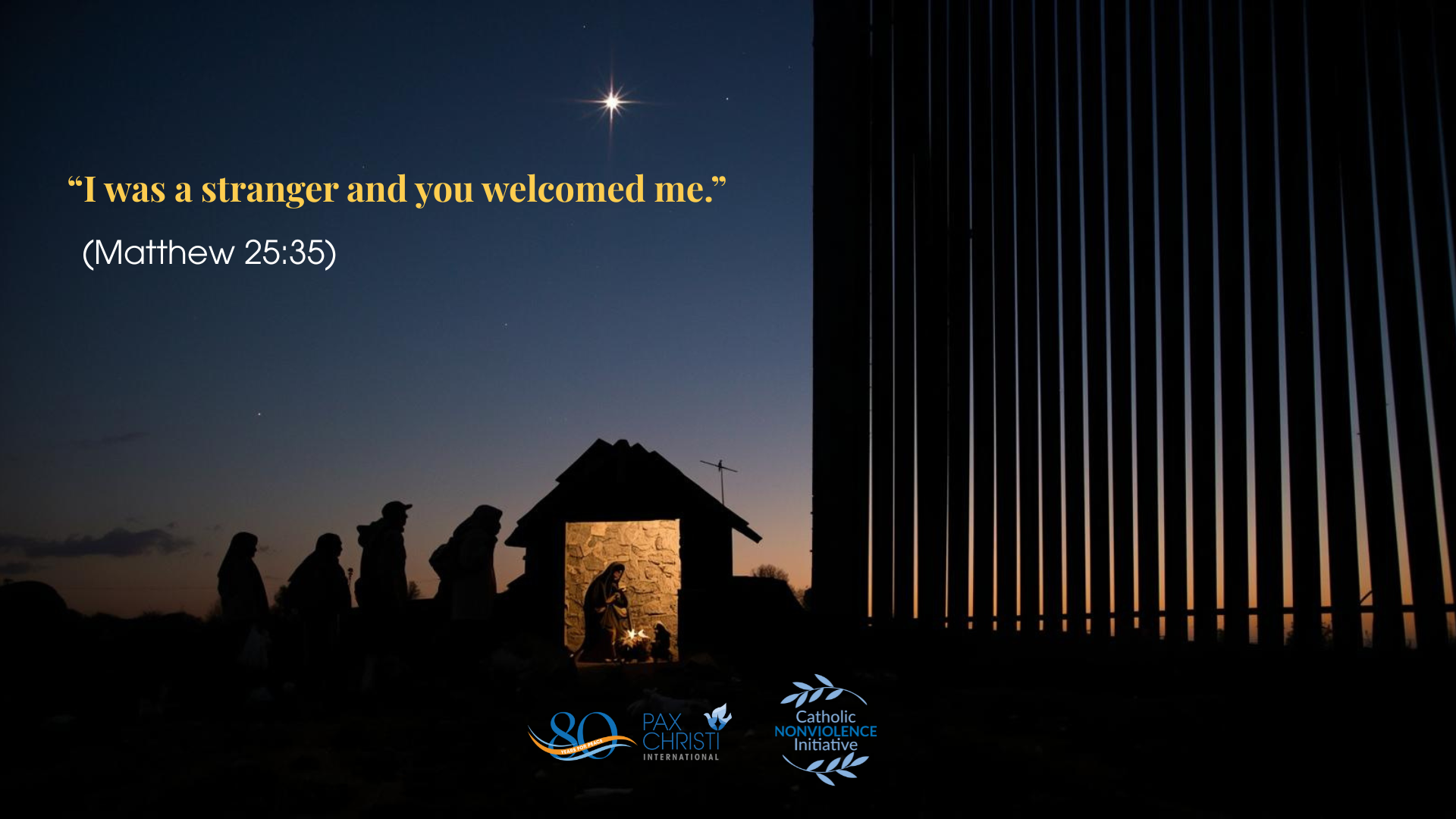
Tonight, Jesus becomes human once again, descending to earth for each one of us. He invites us to open our souls, to make of our hearts a humble shelter in which to welcome him. On Christmas night, hospitality represents the purest value, the simplest and yet most demanding quest: finding the space within ourselves where the manger can take shape once more, the place where he was born last among the last, poor among the poor. Are we worthy of such love? Have we tried, and do we still try, to welcome those who are different from us and who knock at our door asking for hospitality?
When we think of God made human, we remember that he chose to be born poor, yet we rarely think of him also as a stranger. And yet, this is the path Jesus chose for himself: without a home, without protection, entrusted to the hospitality of those he encountered along his journey. From the very beginning, his life speaks to us of an encounter that does not divide, but unites.
On Christmas night, as we are called once again to rediscover, both humanly and spiritually, the meaning of becoming a home for others, our thoughts inevitably turn to all those who continue to set out on journeys, forced to seek a new home and a new life from which to begin again. They too, so often, are in need of a welcome that begins in our hearts.
The theme of migration has been particularly central to Pax Christi International throughout 2025. “Immigration is both a symptom of a broken world that is lacking true peace and an opportunity for the world to find a pathway to peace,” said Bishop Mark Seitz, recipient of the 2025 Peace Award, in recognition of his steadfast commitment to the rights of migrants in the Diocese of El Paso.
It is in this spirit, therefore, that we wish to extend our heartfelt greetings to each one of you for a Christmas of Just Peace for us all. Let us open our hearts to those who are different, welcoming Jesus made human also in the stranger, as we journey towards a new year that may grant us “that cultural, linguistic, racial, economic and religious encounter that is part of our very DNA.”

Leave A Comment